
Hail Damage in Solar Panels (Major Fractures & Microcracks)
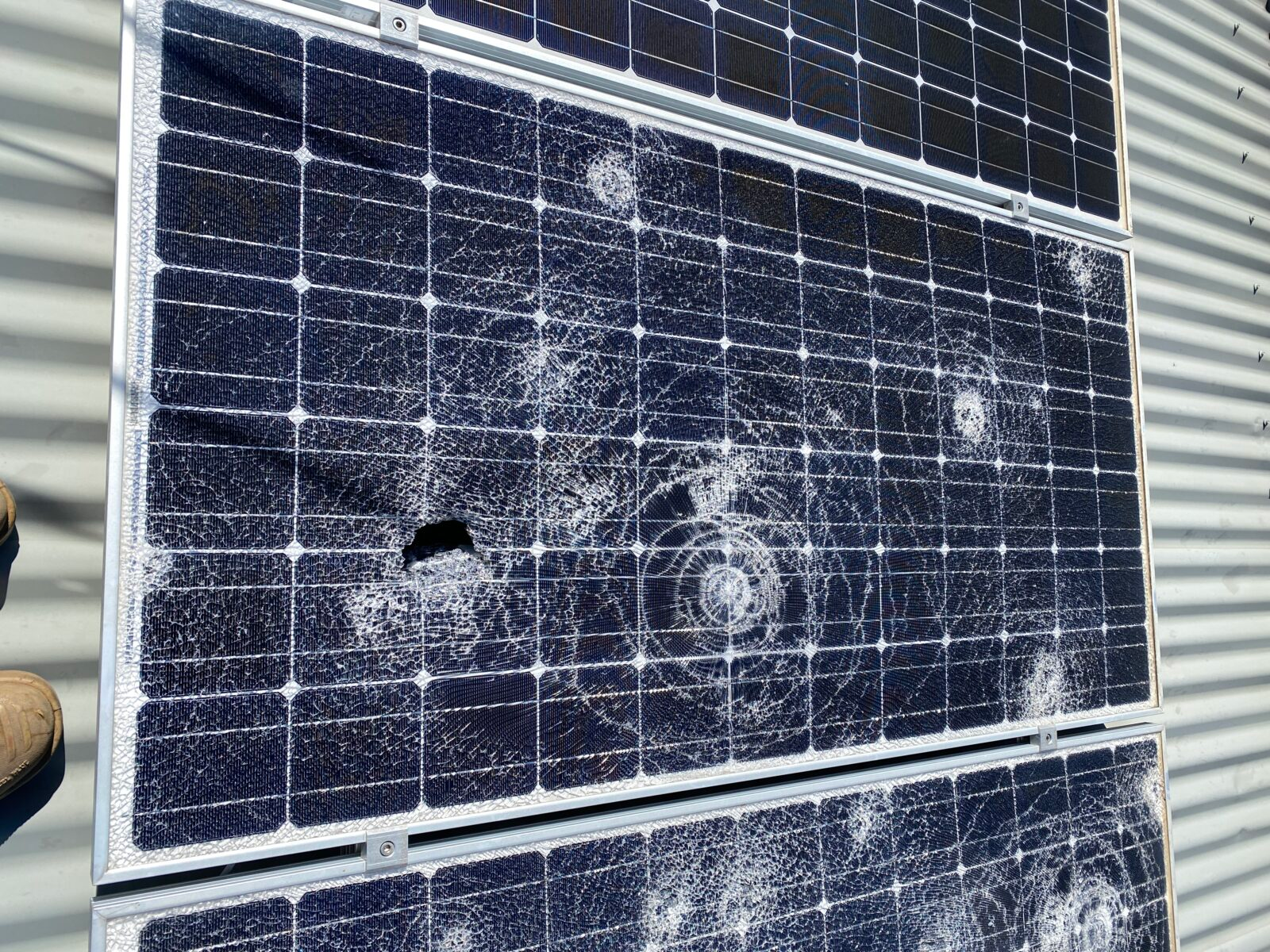
Hail damage occurs when ice impacts crack the front glass or the silicon cells inside a PV module. Damage ranges from visible major fractures (shattered/crazed glass) to invisible microcracks in cells that reduce performance and raise long‑term failure risks. Both can lead to moisture ingress, mismatch, and, in some cases, hotspots.
Effects and Risks
- Major fractures (glass): shattered/crazed surface, loose shards; rapid moisture ingress, insulation issues, and safety hazard; usually replace immediately.
- Microcracks (cells): invisible to the eye; create inactive areas and mismatch, causing power loss and potential hotspots over time.
- Corrosion & delamination: cracked paths admit moisture → finger/busbar corrosion, delamination growth, rising series resistance.
- Frame/rack deformation: may twist the laminate, accelerating further damage.
Detection and Diagnosis
- Visual inspection: shattered or crazed glass, chipped edges, backsheet dents/punctures.
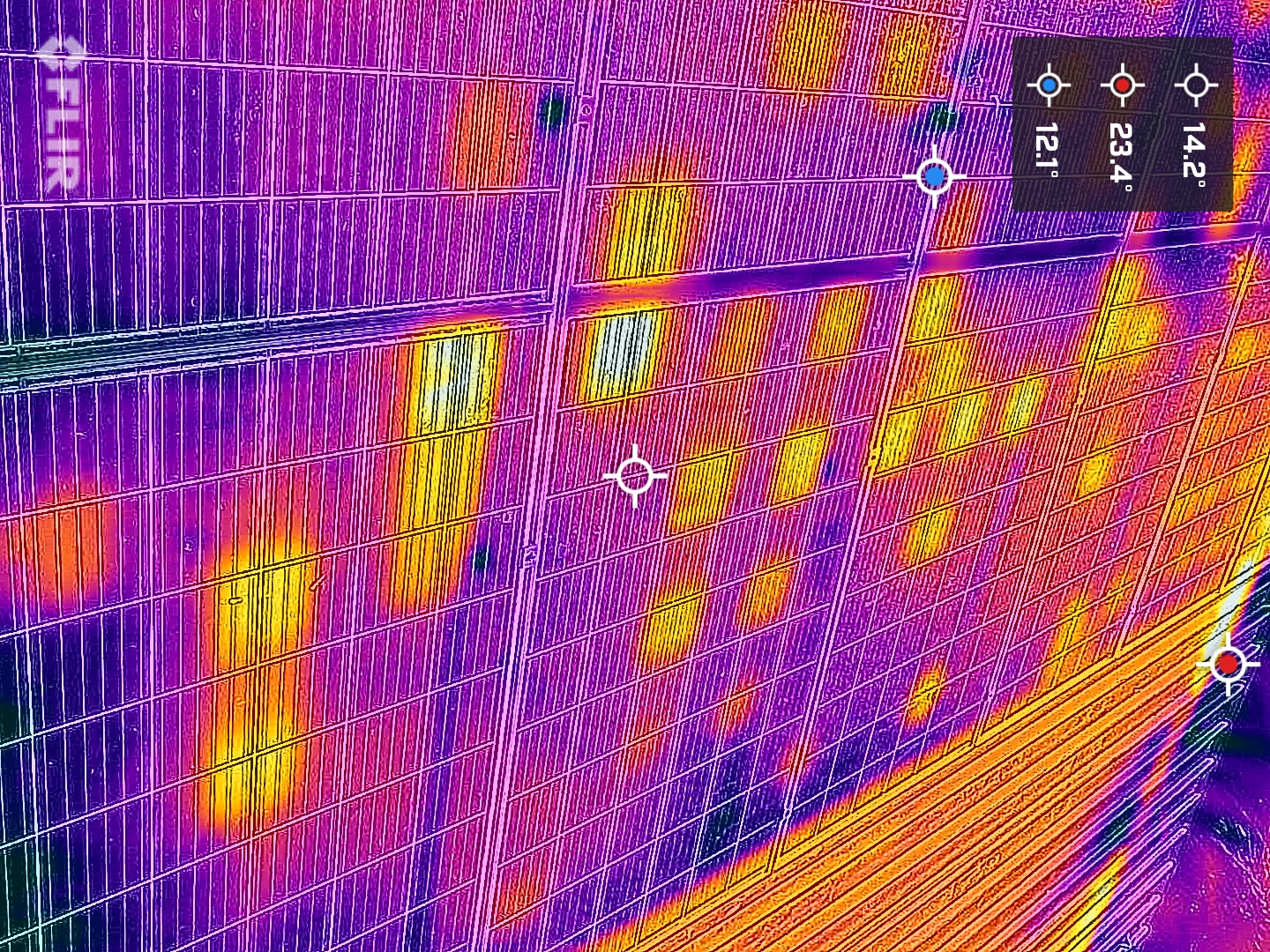
- Infrared (IR) thermography: under load, hail‑induced microcracks commonly present as many small, scattered overheating cells across multiple modules.
- Electroluminescence (EL): best method to reveal microcracks and inactive regions
- Electrical tests: I‑V curve and insulation resistance (IEC 62446) in dry vs wet conditions to assess safety.
Corrective and Preventive Actions
- Safety first: isolate circuits with shattered glass; restrict access beneath damaged arrays.
- Replace modules with broken glass, backsheet punctures, or spreading delamination/corrosion; field re‑lamination is not practical.
- Monitor microcracked modules (no visible glass damage) with IR/EL and performance data; replace if scattered hotspots, rapid loss, or insulation issues emerge.
- Design & procurement: specify modules with robust hail impact ratings; consider glass‑glass designs; adhere to clamp zones/torque and proper racking support.
- O&M: schedule post‑storm inspections; remove loose shards safely; re‑test string performance after replacements.