
Shading in Solar Panels (Soiling, Lichen, Cast Shadows)
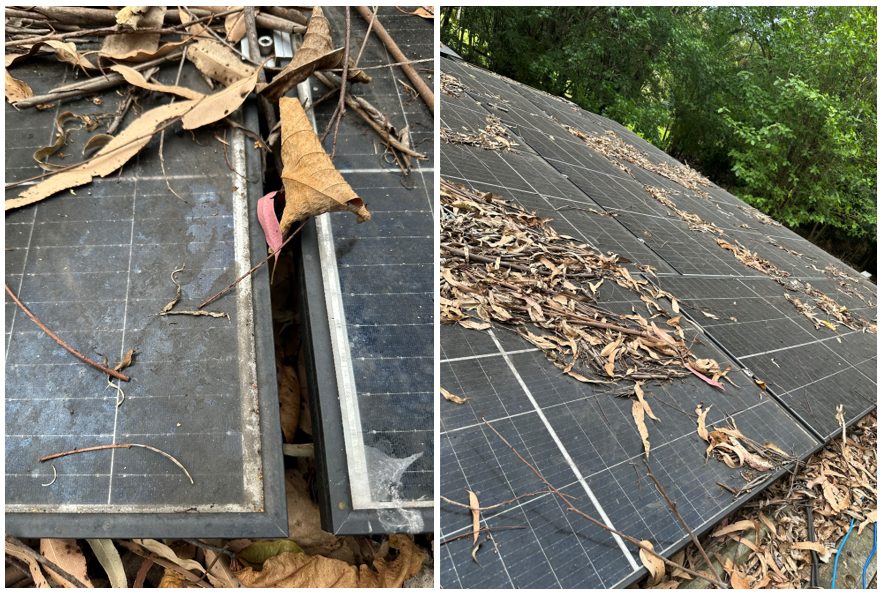
Shading is any reduction of light reaching parts of a PV module—caused by dirt/soiling, biological growth (lichen, moss), or cast shadows from objects (trees, chimneys, rails, cable loops, nearby rows/buildings). Partial shading creates current mismatch in series‑connected cells/strings. Depending on severity, bypass diodes may conduct (substring deactivation) and, in some cases, shaded cells can be driven into reverse bias, leading to localized heating (hotspots) and accelerated ageing.
Common Causes
- Soiling (dirt/dust/bird droppings): non‑uniform deposits, edge‑soiling bands, pollen/soot; opaque spots can force local mismatch.
- Biological growth: lichen/moss/algae at damp edges or under trees; persistent and uneven.
- Cast shadows: trees/vegetation, chimneys/parapets, satellite dishes/vents, antennae, overhead lines, neighboring buildings, skylights.
- Self‑shading: tight row spacing/tilt, mounting clamps outside allowed zones, cable loops laying over cells, junction‑box/nameplate shadows.
- Seasonal/transient: snow/frost/dew bands, water streaks, seasonal leaf growth.
Effects and Risks
- Immediate energy loss; substring bypass diode activation causing voltage steps and reduced array output.
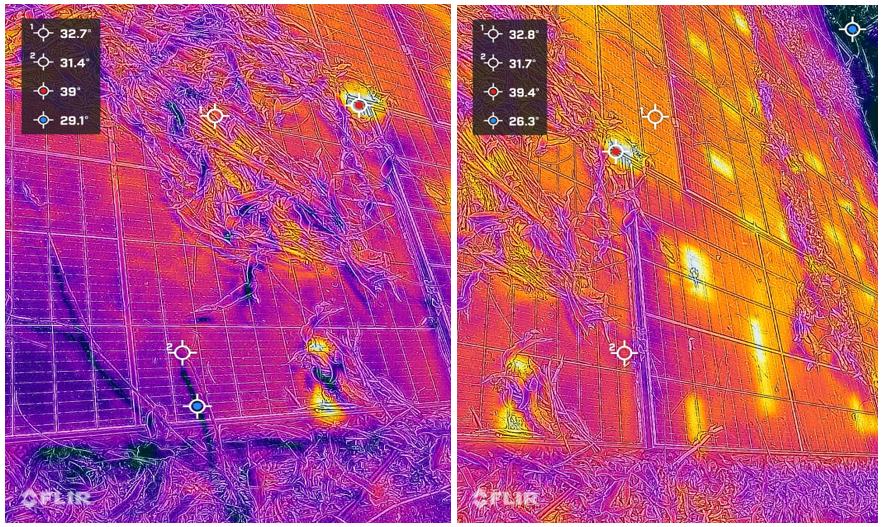
- Thermal effects: shaded areas often cooler in IR; hotspots can appear at/near opaque occluders when mismatch forces reverse bias.
- Component stress: diode heating/stress from frequent conduction; localized mechanical/thermal stress → accelerated degradation.
- Safety (rare but possible): severe mismatch can contribute to hotspot escalation if not corrected.
Detection and Diagnosis
- Visual inspection: confirm soiling, growth, and physical occluders; map time‑of‑day shadow paths.
- IR thermography: scan under load (clear sun, low wind); shaded zones typically cooler; verify if any hot areas persist at occluders/edges; document ΔT and conditions.
- I‑V curve tracing: look for multi‑step curves from bypass diode activation; reduced fill factor; compare against baseline and peer strings.
- Monitoring analytics: string/module mismatch trends, morning/evening asymmetry, recurring drops aligned with object positions.
- Soiling ratio test (optional): paired clean reference plate/panel to quantify soiling impact.
Corrective and Preventive Actions
- Clean modules with approved methods; define cleaning triggers (visual threshold or measured soiling ratio).
- Trim vegetation and remove/relocate persistent occluders; schedule seasonal checks.
- Re‑route/secure cables; place clamps within manufacturer clamp zones; avoid hardware casting cell shadows.
- Design mitigations: adjust row spacing/tilt where feasible; choose orientations that reduce self‑shade.
- Electronics mitigation: consider optimizers/microinverters on partially shaded arrays to localize mismatch losses.
- Bird deterrence and debris guards to prevent re‑soiling.
- Verify after action: repeat IR and check performance metrics to confirm improvement; document before/after.