
Hotspots & Thermal Runaway in Solar Panels
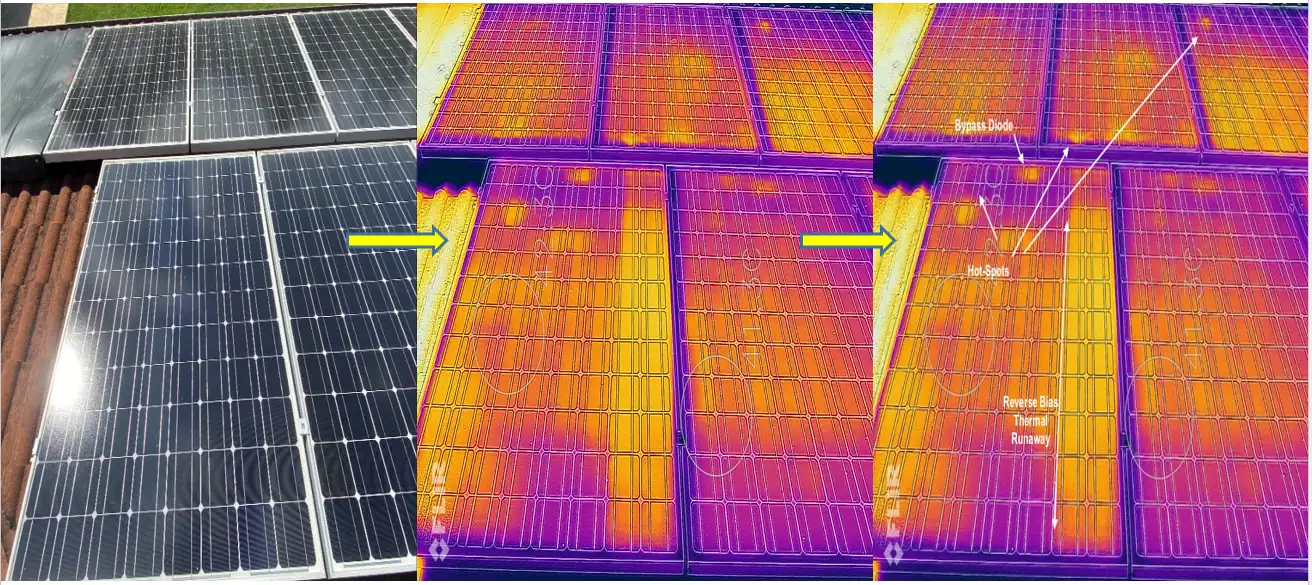
A hotspot in a solar panel is a localized area that becomes significantly hotter than the rest of the module. It develops when a part of the panel carries uneven current or experiences high electrical resistance, converting electrical power into heat instead of energy output. Hotspots reduce efficiency, accelerate material degradation, and can, in extreme cases, lead to thermal runaway.
Common Causes
- Mismatch heating: A weak or shaded cell (crack, PID, soiling, or manufacturing defect) restricts current flow in the series string, may enter reverse bias, and dissipates heat locally.
- Resistive heating: Excess series resistance at solder joints, ribbons, connectors (e.g., MC4), or the junction box produces Joule heating even without reverse bias.
- Bypass diode failure: Faulty or degraded diodes allow reverse‑biased cells to overheat.
- Ageing or corrosion: Oxidation and solder fatigue increase local resistance over time.
Effects and Risks
- Local cell temperatures exceeding 120°C
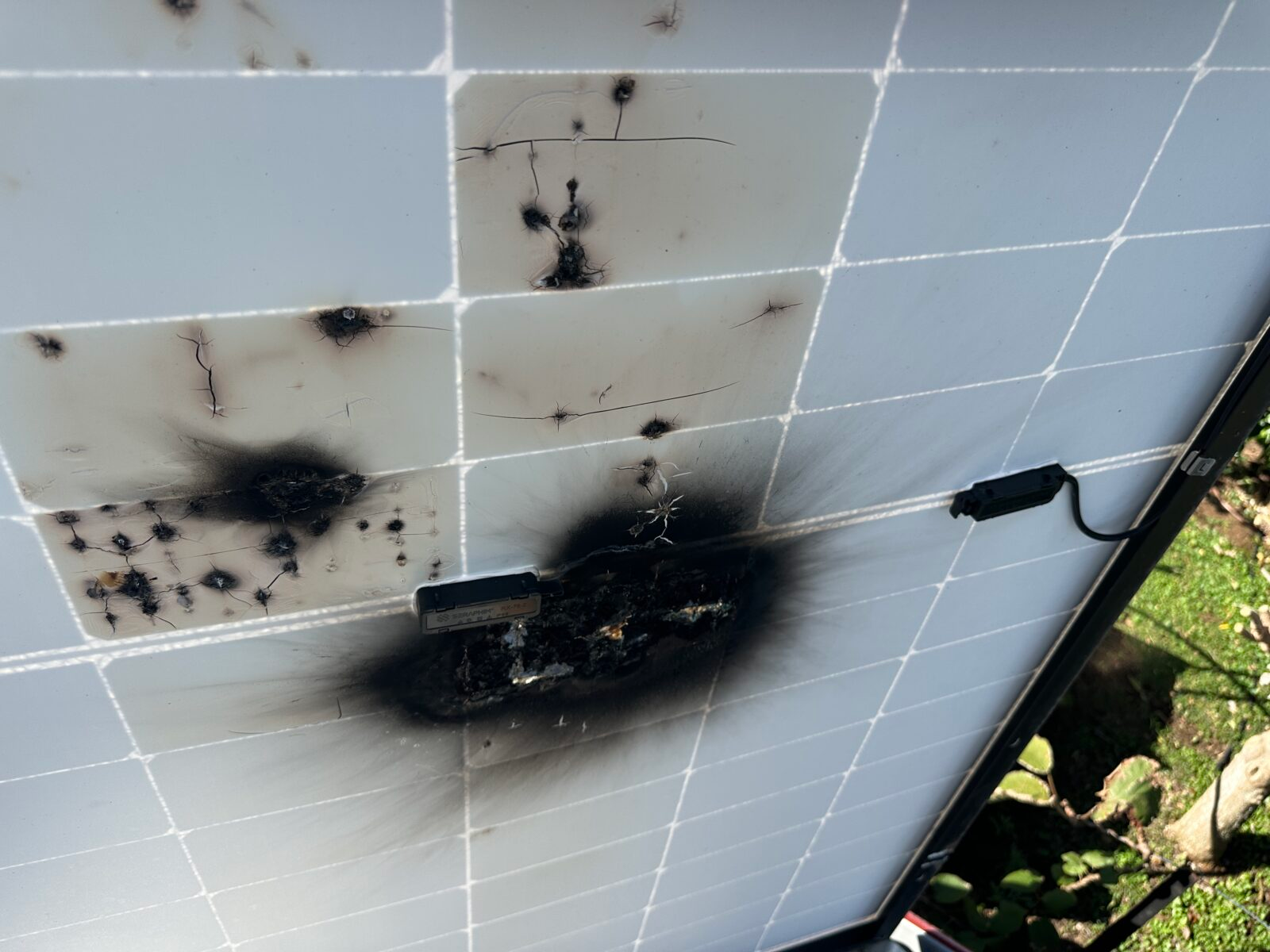
- Encapsulant browning, solder fatigue, glass cracking, or backsheet damage
- Power loss and accelerated module degradation
- In severe cases, thermal runaway or fire hazard
Detection and Diagnosis
- Infrared (IR) thermography: Quickly reveals localized heating.
- I‑V curve tracing: Shows reverse bias or current mismatch.
- Visual inspection: Look for browning, delamination, or burn marks.
- Electroluminescence (EL) imaging: Finds cracks or inactive areas causing imbalance.
Corrective and Preventive Actions
- Unload or isolate the affected string.
- Confirm persistence with IR inspection under load.
- Verify using I‑V/diode tests before deciding on repair or replacement.
- Prevent by proper layout/shading analysis and high‑quality modules/connectors.
- Schedule periodic thermography to detect early degradation.