Common faults in solar panels
What Constitutes a Solar Panel Fault?
A fault in a solar panel refers to any irreversible issue that significantly degrades its power output or poses safety risks. Cosmetic changes—like discoloration from manufacturing variances or age—aren’t considered faults unless they adversely affect performance or safety.
Faults can emerge due to manufacturing defects, during transportation, improper installation, or external damage (e.g. hail). Notably, a large share of failures originates from the manufacturing process, which may shorten the panel’s lifespan—sometimes significantly under 10 years if serious faults exist.
The 10 Most Common Solar Panel Faults
According to the International Energy Agency’s review of PV module failures, the most frequently encountered faults include:
- Delamination
- Junction box failure
- Frame breakage
- Micro-cracks / Micro-fractures
- Snail tracks
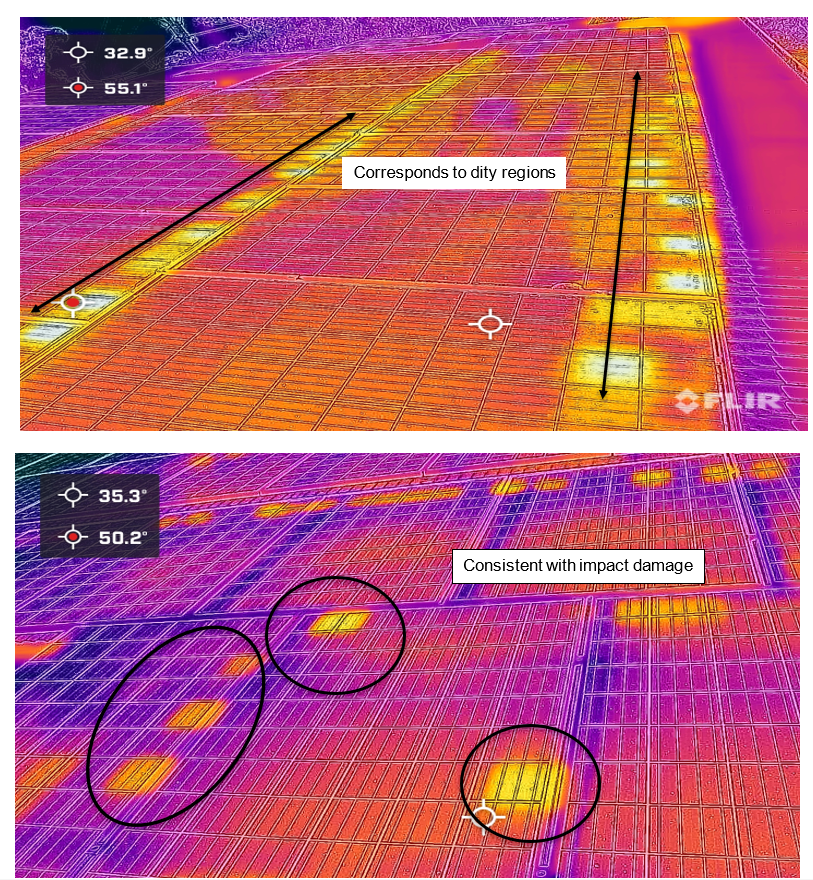
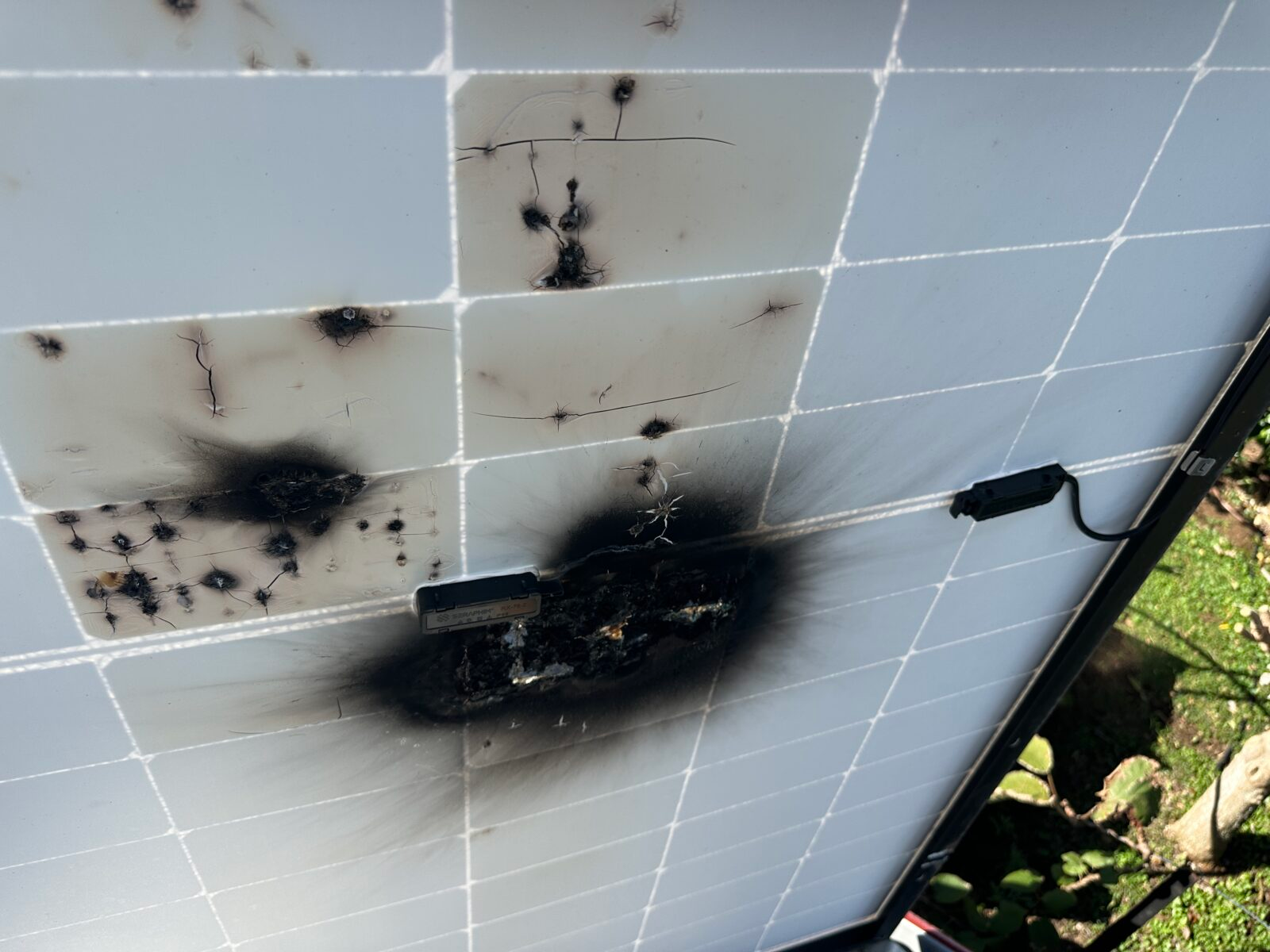
- Burn marks / Hot spots
- Potential-Induced Degradation (PID)
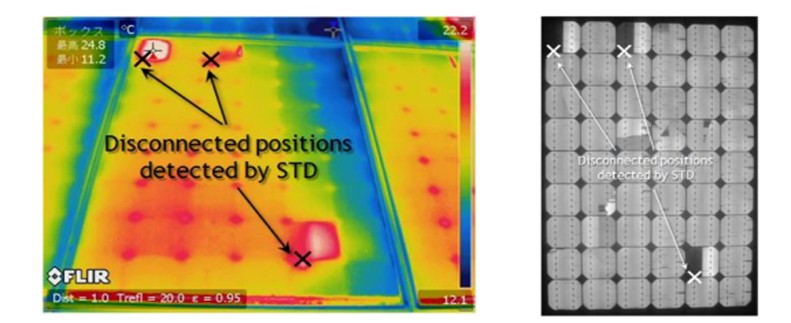
- Disconnected cells or string interconnect ribbon
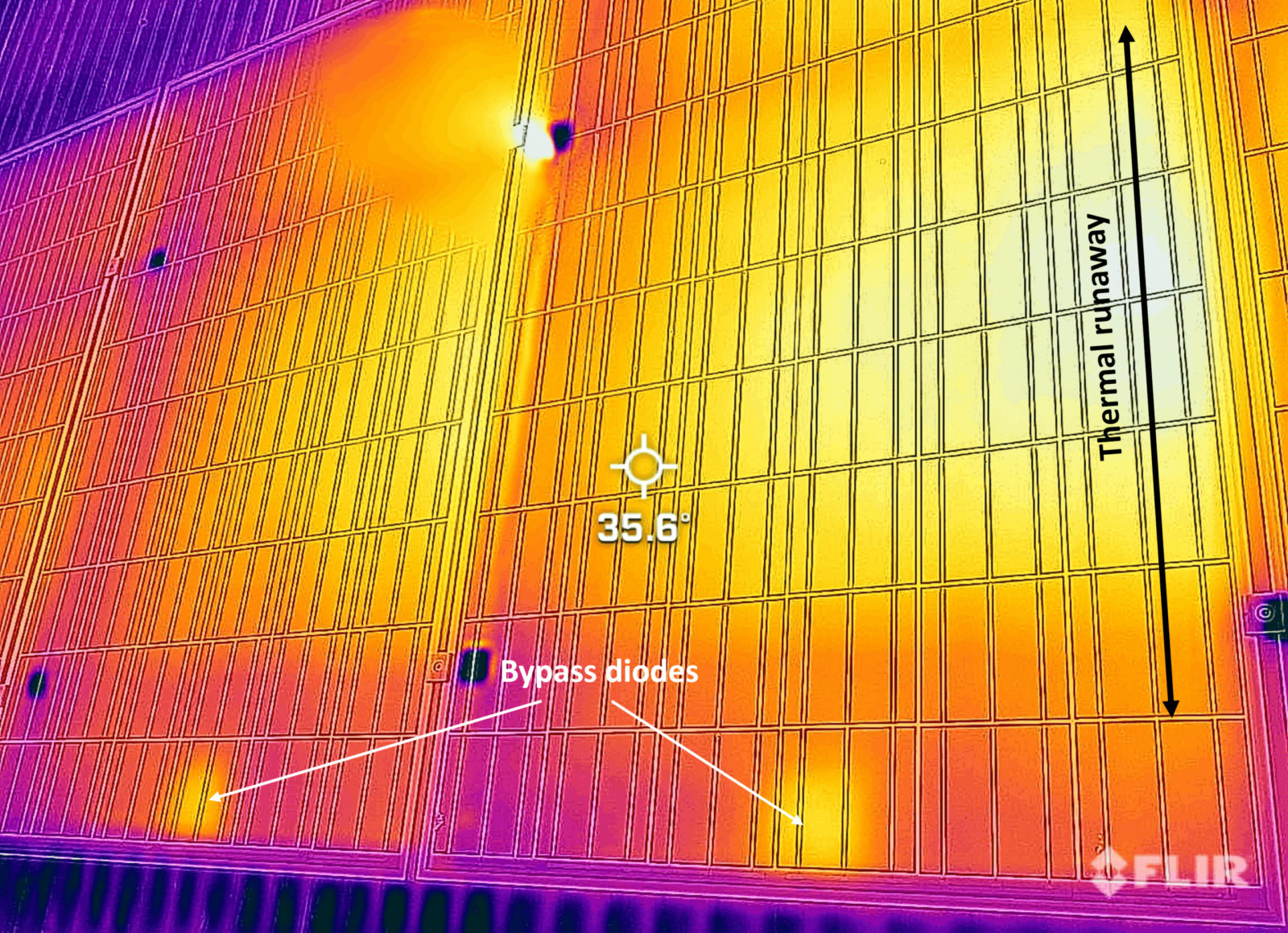
- Defective bypass diode
- EVA (encapsulant) discoloration. Find more here IEA-PVPS
Below, each failure is described along with its usual causes and impacts: of these failures to mention the most probable cause of the problem.
Delamination.
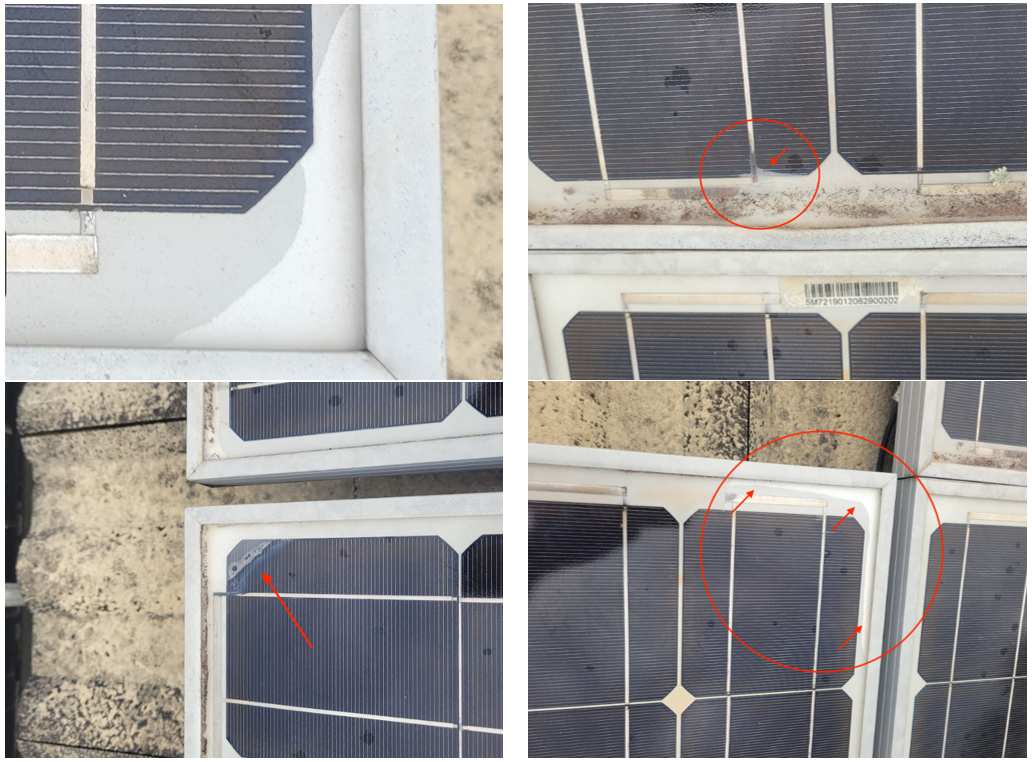
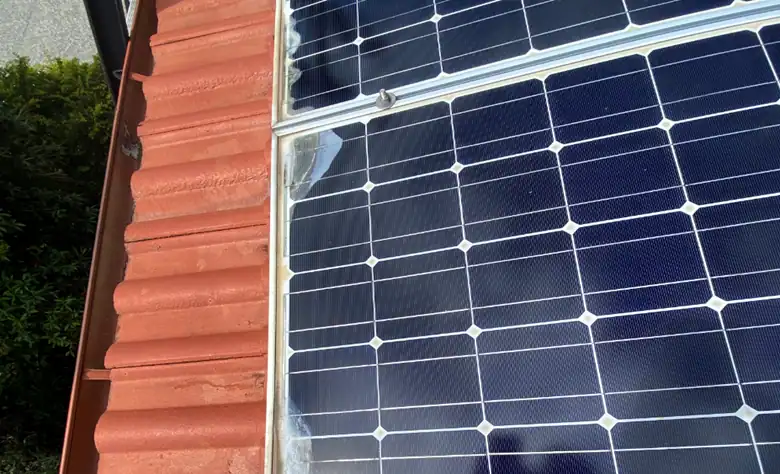
This involves separation between the glass, encapsulant, solar cell layers, or backsheet—often due to poor adhesion during manufacturing or contamination of surfaces. It allows moisture ingress, leading to corrosion and power loss, and can also introduce safety issues if electrical parts become exposed.
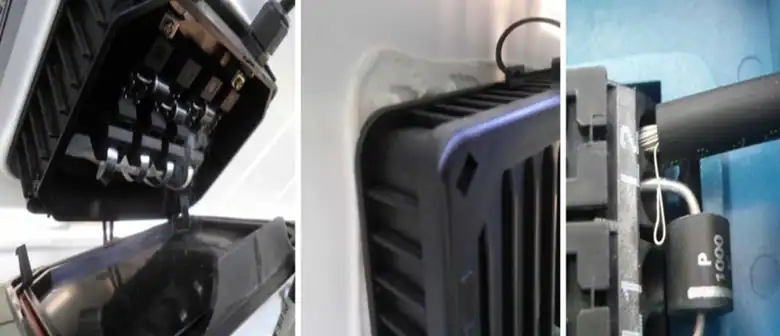
Junction box failure
A junction box (JB) is the container on the backside of the solar panel that protects the connection of the cell strings of the module to external terminals. The junction box also holds the bypass diode that prevents a reverse flow of current from the cells in case of partial shadowing or hot spots. Some problems that may lead to junction failure include:
- Poor fixing of the junction box to the backsheet
- Moisture ingress, which may lead to corrosion and short-circuit
- Incorrect wiring, leading to arching
- Unreliable soldering of the cell interconnect ribbons may lead to increased resistance and overheating in the junction box.
Frame breakage
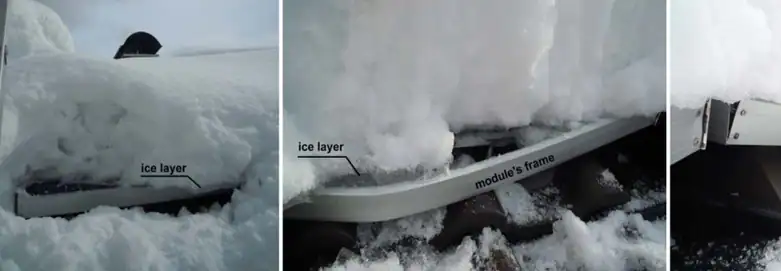
The external impact, such as hail impact or excessive loading of the solar panel (such as snow or ice accumulation), may break the frame of the solar panel. Excessive loading is usually avoided by slanting the solar panel. Slanting takes advantage of the gravitational effect and shifts the load to the lower side of the panel, where it can easily drop off the panel.
Micro-cracks/Micro-fractures
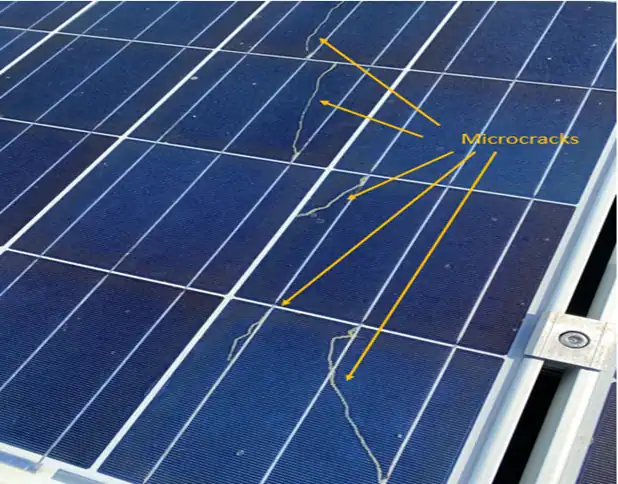
Micro-cracks (also known as cell cracks) are cracks on the silicon substrate of the photovoltaic cells. Depending on how developed they are, micro-cracks may not be visible to the naked eye and may require electroluminescence or thermal imaging. Micro-cracks can develop during manufacturing due to impact damage or due to hot spots on the solar panel. Micro-cracks developed from the manufacturing process are usually irregular, but those that develop from impact damage originate from a point and disperse to the other parts of the cell.
Snail tracks
Named for their slim, trail-like discolorations, snail tracks are caused by oxidation at micro-cracks or due to defective metallization. They’re mainly cosmetic but may accompany micro-cracks or reduced longevity. In some cases with cracks, performance loss of 4–15% has been documented
Burn marks
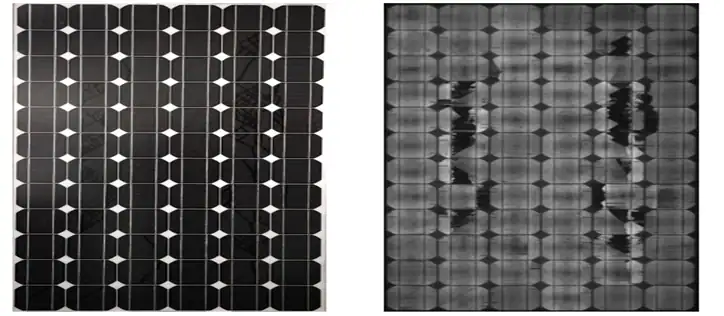
These arise when localized defects (e.g., cracked cells or poor solder joints) create high resistance, generating heat. Hot spots can permanently damage cells or even pose fire risks and are readily detected with IR imaging
Potentially induced degradation (PID)
Potentially Induced Degradation (PID) is usually seen in an array with strings that have distinct voltages with respect to ground. The string with the highest voltage will have the highest power loss. N-type PV modules evolve potential induced power loss at the positive polarity while P-type cells degrade in the negative polarity. The PV module design has a fundamental influence on how the module is affected by PID.
Disconnected cell and string interconnect ribbon
A solar panel is made up of an array of interconnected solar cells. The cells are interconnected with cell interconnect ribbons, connected from the front to the rear side of the solar cell. A series of interconnected cells is known as a string. When solar cell strings are interconnected, they form the PV module. If the interconnect ribbon between the cells or strings is broken, current flow is blocked, and resistance of the cell increases, leading to the formation of hot spots.
Defective bypass diode
Bypass diodes are integrated into the PV modules in parallel to a certain number of solar cells to prevent power loss caused by the reverse biasing of a single solar cell with a higher voltage than the allowed cell reverse bias voltage. The bypass diode prevents power loss due to partial shading. When the bypass diode fails, reverse biasing of the cell occurs, leading to overheating and hot spots. Hot spots further increase the resistance of the cell leading to thermal runaway.
EVA discoloration
This type of PV degradation is associated with the discoloration of the ethylene-vinyl acetate (EVA) or other encapsulation materials. EVA is usually made with additives and UV and thermal stabilizers. Discoloration occurs if the concentration of additives is inadequate. This is mainly considered to be an aesthetic issue, but studies have shown that it also contributes to a small percentage of power degradation. Nevertheless, unless discoloration is very severe and concentrated at a single point, it has insignificant effects on the power and safety of the solar panel.